
(ICCMTA - 26) | Hybrid Event
22nd - 23rd July 2026 |
Santa Clara, Cuba
(ICCMTA - 26) | Hybrid Event
22nd - 23rd July 2026 |
Santa Clara, Cuba
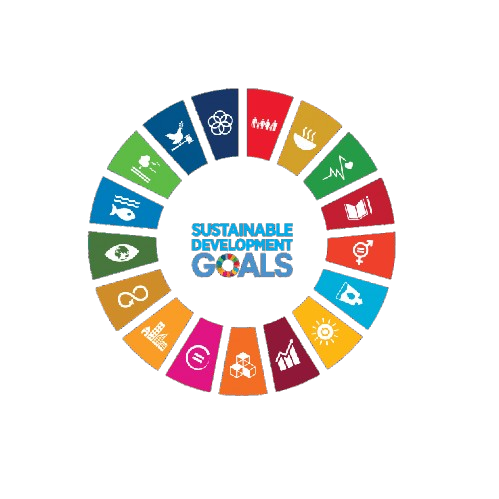
Aligned with
This conference contributes to global sustainability by aligning its research discussions and academic sessions with key United Nations Sustainable Development Goals. It fosters knowledge exchange, innovation, and collaborative engagement.
 SDG 9 — Industry, Innovation and Infrastructure
 SDG 12 — Responsible Consumption and Production
This track focuses on the latest theoretical developments in condensed matter physics, emphasizing novel approaches and methodologies. Participants are encouraged to present their findings on emergent phenomena and theoretical predictions in various condensed matter systems.
This session will explore the role of lattice models in understanding complex physical systems, including their applications in simulating real-world materials. Contributions are welcome that demonstrate the effectiveness of lattice models in elucidating phase transitions and critical phenomena.
This track aims to delve into the intricacies of electronic correlations in strongly correlated materials, highlighting both theoretical and computational advancements. Researchers are invited to discuss their insights on the implications of these correlations for material properties and phase behavior.
This session will cover the latest techniques in many-body physics, with a particular focus on quantum simulations as a tool for exploring complex systems. Presentations should address the challenges and breakthroughs in simulating many-body interactions and their consequences.
This track will investigate the fascinating realm of topological phases and their implications for quantum materials. Contributions are encouraged that explore the interplay between topology, electronic structure, and emergent phenomena in novel materials.
This session will focus on the theoretical aspects of superconductivity, including the mechanisms behind superconducting behavior and its potential applications. Researchers are invited to share their findings on new superconducting materials and the role of electronic correlations.
This track will explore the theoretical frameworks and applications of spin models in understanding magnetic phenomena. Presentations should highlight recent advancements in the study of magnetism and its relationship with low-dimensional systems.
This session will focus on the development and application of computational modeling techniques in condensed matter physics. Participants are encouraged to present their work on simulations that provide insights into electronic structure and material properties.
This track will investigate the unique characteristics of phase transitions in low-dimensional systems, emphasizing theoretical insights and experimental observations. Contributions should address the challenges posed by reduced dimensionality on phase behavior and stability.
This session will cover advancements in electronic structure calculations and their implications for understanding band theory. Researchers are invited to present their findings on how these calculations inform the design and discovery of new materials.
This track will focus on emergent phenomena in quantum systems, exploring how collective behaviors arise from individual interactions. Contributions should highlight theoretical frameworks and experimental evidence that shed light on these complex behaviors.










SNRI maintains uninterrupted academic processes in the current global situation. Participants can engage and publish through online and blended conference formats.
PLEASE READ: CLOSING ENABLED IN 20S