
(ICELSEE - 26) | Hybrid Event
18th - 19th August 2026 |
Suez, Egypt
(ICELSEE - 26) | Hybrid Event
18th - 19th August 2026 |
Suez, Egypt
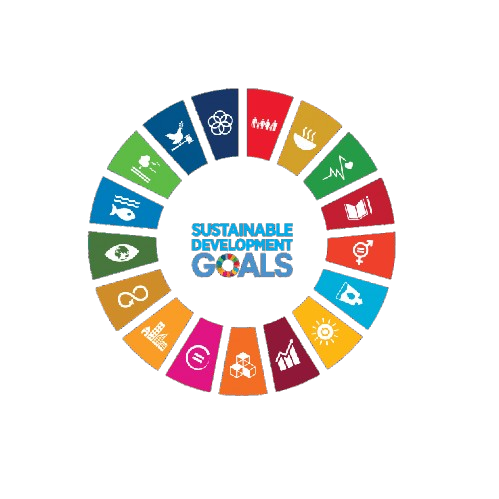
Aligned with
This conference contributes to global sustainability by aligning its research discussions and academic sessions with key United Nations Sustainable Development Goals. It fosters knowledge exchange, innovation, and collaborative engagement.
 SDG 4 — Quality Education
 SDG 9 — Industry, Innovation and Infrastructure
 SDG 11 — Sustainable Cities and Communities
 SDG 12 — Responsible Consumption and Production
 SDG 13 — Climate Action
 SDG 14 — Life Below Water
 SDG 15 — Life on Land
 SDG 17 — Partnerships for the Goals
This track focuses on cutting-edge methodologies and technologies in environmental life sciences. Researchers are invited to present novel solutions that address pressing ecological challenges through interdisciplinary collaboration.
This session will explore engineering practices that promote sustainability in ecosystem management. Contributions should highlight successful case studies and frameworks that integrate ecological principles into engineering solutions.
This track aims to showcase the latest advancements in technologies for environmental monitoring. Papers should discuss innovative tools and methods that enhance our ability to track ecological changes and inform management strategies.
This session will examine engineering solutions that contribute to biodiversity conservation. Participants are encouraged to share research that demonstrates the impact of engineering interventions on preserving ecological diversity.
This track focuses on the development and application of environmental modeling techniques for assessing climate impacts. Contributions should provide insights into modeling frameworks that aid in understanding and mitigating climate-related challenges.
This session will explore engineering strategies aimed at habitat restoration and enhancing ecological resilience. Papers should present innovative approaches that facilitate the recovery of degraded ecosystems.
This track emphasizes the role of environmental analytics in informing decision-making processes. Researchers are invited to present studies that utilize data-driven approaches to address environmental challenges.
This session will focus on optimization techniques in ecological engineering systems. Contributions should highlight methods that enhance the efficiency and effectiveness of engineering solutions in environmental contexts.
This track will explore the intersection of bioengineering and sustainable development. Papers should discuss innovative bioengineering applications that contribute to environmental sustainability and resource management.
This session will highlight integrative approaches that combine life sciences with engineering disciplines. Researchers are encouraged to present interdisciplinary studies that foster collaboration and innovation in addressing ecological issues.
This track will examine emerging trends and technologies in ecological engineering. Participants are invited to share insights on how these innovations can be leveraged to tackle contemporary environmental challenges.











SNRI maintains uninterrupted academic processes in the current global situation. Participants can engage and publish through online and blended conference formats.
PLEASE READ: CLOSING ENABLED IN 20S