
(ICEMRSE - 26) | Hybrid Event
6th - 7th July 2026 |
Beira, Mozambique
(ICEMRSE - 26) | Hybrid Event
6th - 7th July 2026 |
Beira, Mozambique
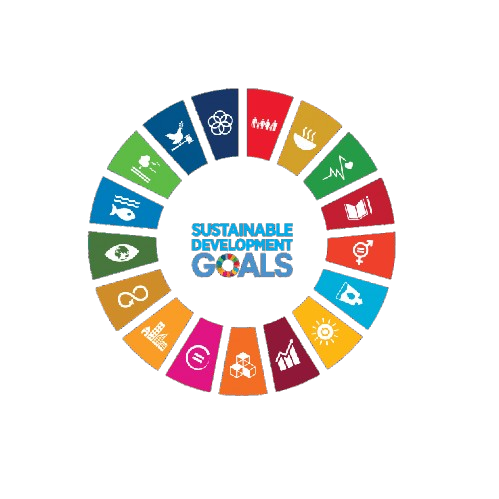
Aligned with
This conference contributes to global sustainability by aligning its research discussions and academic sessions with key United Nations Sustainable Development Goals. It fosters knowledge exchange, innovation, and collaborative engagement.
 SDG 3 — Good Health and Well-being
 SDG 9 — Industry, Innovation and Infrastructure
 SDG 11 — Sustainable Cities and Communities
 SDG 12 — Responsible Consumption and Production
 SDG 13 — Climate Action
 SDG 14 — Life Below Water
 SDG 15 — Life on Land
This track focuses on the latest developments in satellite imagery technologies and their applications in environmental monitoring. Participants will explore case studies demonstrating the effectiveness of satellite data in tracking pollution and assessing ecological health.
This session will delve into the integration of Geographic Information Systems (GIS) with remote sensing data for enhanced environmental analysis. Topics will include spatial data visualization, mapping techniques, and the role of GIS in sustainable development.
This track aims to discuss innovative predictive modeling approaches used in environmental engineering. Emphasis will be placed on methodologies that leverage remote sensing data to forecast environmental changes and assess risks.
Participants will examine various feature extraction techniques utilized in processing remote sensing data for environmental applications. The session will highlight advancements in machine learning and image processing that enhance feature identification.
This track will cover the latest sensor technologies deployed in environmental monitoring efforts. Discussions will include the integration of IoT devices and remote sensing platforms for real-time data collection and analysis.
This session will focus on the role of data analytics in interpreting remote sensing data for environmental applications. Participants will explore analytical frameworks that facilitate decision-making in environmental management.
This track will investigate the contributions of remote sensing technologies to sustainable development initiatives. Case studies will illustrate how remote sensing supports resource management and environmental conservation efforts.
This session will address methodologies for tracking pollution sources and assessing their impacts using remote sensing techniques. Participants will discuss innovative approaches to mitigate pollution based on remote sensing data.
This track will explore the application of remote sensing technologies in ecological assessments and biodiversity monitoring. Participants will share insights on how remote sensing can enhance ecological research and conservation strategies.
This session will focus on the use of remote sensing for infrastructure monitoring and optimization. Discussions will include techniques for assessing structural integrity and environmental impacts on infrastructure.
This track will examine approaches to optimize systems in environmental engineering through the use of remote sensing data. Participants will discuss strategies for improving efficiency in environmental monitoring processes.











SNRI maintains uninterrupted academic processes in the current global situation. Participants can engage and publish through online and blended conference formats.
PLEASE READ: CLOSING ENABLED IN 20S