(ICSGEAB - 26) | Hybrid Event
8th - 9th December 2026 |
Bali, Indonesia
(ICSGEAB - 26) | Hybrid Event
8th - 9th December 2026 |
Bali, Indonesia
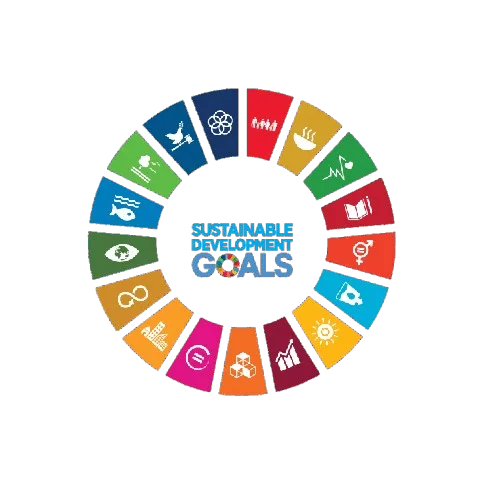
Aligned with
This conference contributes to global sustainability by aligning its research discussions and academic sessions with key United Nations Sustainable Development Goals. It fosters knowledge exchange, innovation, and collaborative engagement.
 SDG 7 — Affordable and Clean Energy
 SDG 9 — Industry, Innovation and Infrastructure
 SDG 11 — Sustainable Cities and Communities
This track focuses on the latest advancements in blockchain technology and its applications within smart grid systems. Researchers are invited to present novel solutions that leverage blockchain for enhanced energy distribution and management.
This session will explore various predictive modeling methodologies applicable to smart grid engineering. Contributions should emphasize the integration of machine learning techniques to forecast energy demands and optimize grid performance.
This track aims to discuss the application of deep learning algorithms for identifying anomalies in power systems. Papers should highlight innovative techniques for improving system reliability and reducing operational risks.
This session will delve into effective feature extraction techniques that enhance energy analytics in smart grids. Submissions should demonstrate how these methods can improve decision-making processes and operational efficiencies.
This track will examine the role of Internet of Things (IoT) technologies in the development of smart grid infrastructures. Researchers are encouraged to present studies that showcase the synergy between IoT and blockchain for improved energy management.
This session will focus on the application of supervised and unsupervised learning techniques in the context of energy distribution. Contributions should address challenges and solutions in utilizing these learning paradigms for grid optimization.
This track invites discussions on the intersection of renewable energy analytics and blockchain technology. Papers should explore how blockchain can facilitate the integration and management of renewable energy sources within smart grids.
This session will investigate risk assessment methodologies tailored for smart grid engineering applications. Submissions should propose frameworks that incorporate blockchain to enhance risk management strategies.
This track will highlight innovations in workflow automation technologies for smart grid operations. Researchers are invited to share insights on how automation can be enhanced through blockchain integration.
This session will focus on advanced system monitoring and model evaluation techniques in smart grid environments. Contributions should emphasize the role of blockchain in ensuring data integrity and system performance.
This track will explore resource allocation strategies within the context of industrial IoT applications in smart grids. Papers should discuss how blockchain can optimize resource distribution and enhance operational efficiency.