(ICHAME - 26) | Hybrid Event
15th - 16th June 2026 |
Gaborone, Botswana
(ICHAME - 26) | Hybrid Event
15th - 16th June 2026 |
Gaborone, Botswana
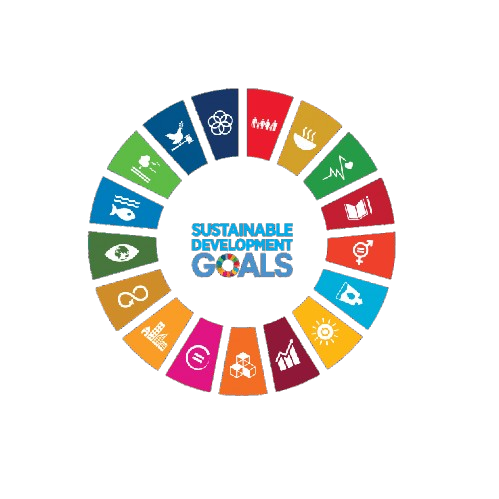
Aligned with
This conference contributes to global sustainability by aligning its research discussions and academic sessions with key United Nations Sustainable Development Goals. It fosters knowledge exchange, innovation, and collaborative engagement.
 SDG 9 — Industry, Innovation and Infrastructure
 SDG 11 — Sustainable Cities and Communities
 SDG 12 — Responsible Consumption and Production
 SDG 13 — Climate Action
 SDG 14 — Life Below Water
This track focuses on the latest research and innovations in hydrodynamic principles applied to marine structures. Topics include wave-structure interaction and the impact of ocean currents on structural integrity.
This session explores the application of computational fluid dynamics (CFD) in marine engineering, emphasizing simulation techniques and their practical applications. Participants will discuss advancements in modeling complex flow phenomena around marine vessels and structures.
This track addresses the challenges of ship resistance and the methodologies for optimizing vessel performance. Discussions will include hydrodynamic modeling and experimental approaches to reduce drag and enhance efficiency.
This session delves into the phenomenon of vortex-induced vibrations and their implications for marine structures. Researchers will present findings on mitigation strategies and design considerations to enhance structural resilience.
This track focuses on the complexities of turbulence modeling in marine environments, highlighting both theoretical and practical approaches. Participants will share insights on the impact of turbulence on marine engineering applications.
This session emphasizes the importance of hydrodynamic testing in validating theoretical models and simulations. Presentations will cover experimental techniques and their role in advancing marine engineering practices.
This track investigates the interactions between fluids and structures in marine environments, highlighting their significance in design and safety. Researchers will discuss methodologies for analyzing and predicting these interactions.
This session covers the latest developments in wave modeling techniques and their applications in marine engineering. Topics will include the prediction of wave behavior and its impact on marine structures.
This track focuses on the use of flow simulations to understand and predict marine phenomena. Participants will explore case studies that demonstrate the practical implications of these simulations in engineering design.
This session addresses the unique challenges posed by offshore hydrodynamics, including environmental impacts and operational safety. Discussions will focus on innovative solutions and best practices in offshore engineering.
This track explores various optimization techniques aimed at improving hydrodynamic performance in marine engineering. Participants will discuss algorithms and methodologies that enhance design efficiency and operational effectiveness.







SNRI maintains uninterrupted academic processes in the current global situation. Participants can engage and publish through online and blended conference formats.
PLEASE READ: CLOSING ENABLED IN 20S