(ICCSSST - 27) | Hybrid Event
2nd - 3rd February 2027 |
Cartago, Costa Rica
(ICCSSST - 27) | Hybrid Event
2nd - 3rd February 2027 |
Cartago, Costa Rica
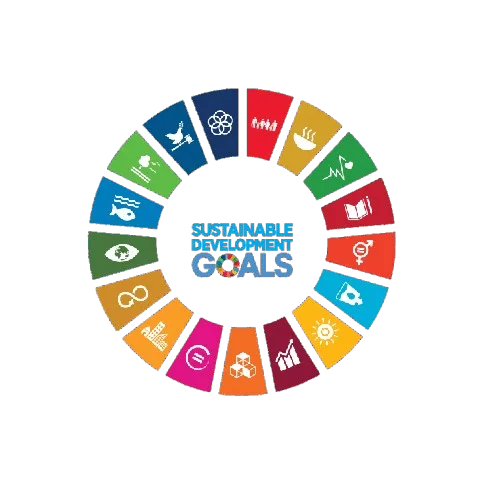
Aligned with
This conference contributes to global sustainability by aligning its research discussions and academic sessions with key United Nations Sustainable Development Goals. It fosters knowledge exchange, innovation, and collaborative engagement.
 SDG 4 — Quality Education
 SDG 8 — Decent Work and Economic Growth
 SDG 9 — Industry, Innovation and Infrastructure
 SDG 10 — Reduced Inequalities
 SDG 11 — Sustainable Cities and Communities
 SDG 13 — Climate Action
 SDG 16 — Peace, Justice and Strong Institutions
 SDG 17 — Partnerships for the Goals
This track explores the interplay between political, economic, and religious ideologies within complex social systems. It aims to analyze how these ideological constructs shape societal dynamics and influence individual behavior.
Focusing on systems dynamics modeling and simulation, this track invites contributions that demonstrate innovative methodologies for analyzing social systems. Participants will discuss practical applications and theoretical advancements in modeling complex social interactions.
This session seeks to delve into various sociological theories that explain the complexities of human behavior and societal structures. Contributions will critically assess classical and contemporary theories in the context of modern social challenges.
This track examines the role of utopian and dystopian narratives in shaping societal values and aspirations. Papers will explore how these narratives influence public perception and policy-making in contemporary contexts.
Participants in this track will analyze historical case studies that illustrate the evolution of social systems over time. The focus will be on understanding how past events and ideologies inform current sociological frameworks.
This session invites discussions on the intricate relationship between culture and sociology, emphasizing how cultural values and ethics influence social behavior. Contributions will explore diverse cultural contexts and their implications for sociological research.
This track addresses the ethical considerations inherent in studying and modeling complex social systems. Papers will explore the moral implications of research methodologies and the responsibilities of sociologists in their work.
This session encourages interdisciplinary dialogue on the complexities of social systems, integrating insights from sociology, psychology, economics, and political science. Participants will share innovative frameworks that bridge disciplinary boundaries.
Exploring the impact of technology on social systems, this track will examine how digital innovations reshape communication, community, and identity. Contributions will analyze both positive and negative consequences of technological advancements on societal structures.
This track focuses on the concepts of resilience and adaptation within complex social systems, particularly in response to crises and change. Papers will investigate strategies that societies employ to navigate challenges and maintain stability.
This session will explore the multifaceted effects of globalization on social systems, including cultural exchange, economic interdependence, and political dynamics. Contributions will assess how globalization reshapes identities and social structures across different contexts.